- oxyplusmedicalcentre@gmail.com
-
Mon - Sat, 10.00AM - 07.00PM
How Functional Medicine Treats PCOS, Thyroid & Hormones?
PCOS, thyroid problems, and hormonal imbalance do not always appear as three separate issues. In many women, they overlap. That is why symptoms like irregular periods, tiredness, weight changes, acne, hair fall, or low mood can feel confusing. PCOS is a hormone related condition with reproductive and metabolic effects, and thyroid problems can also affect energy, weight, periods, fertility, and mood.
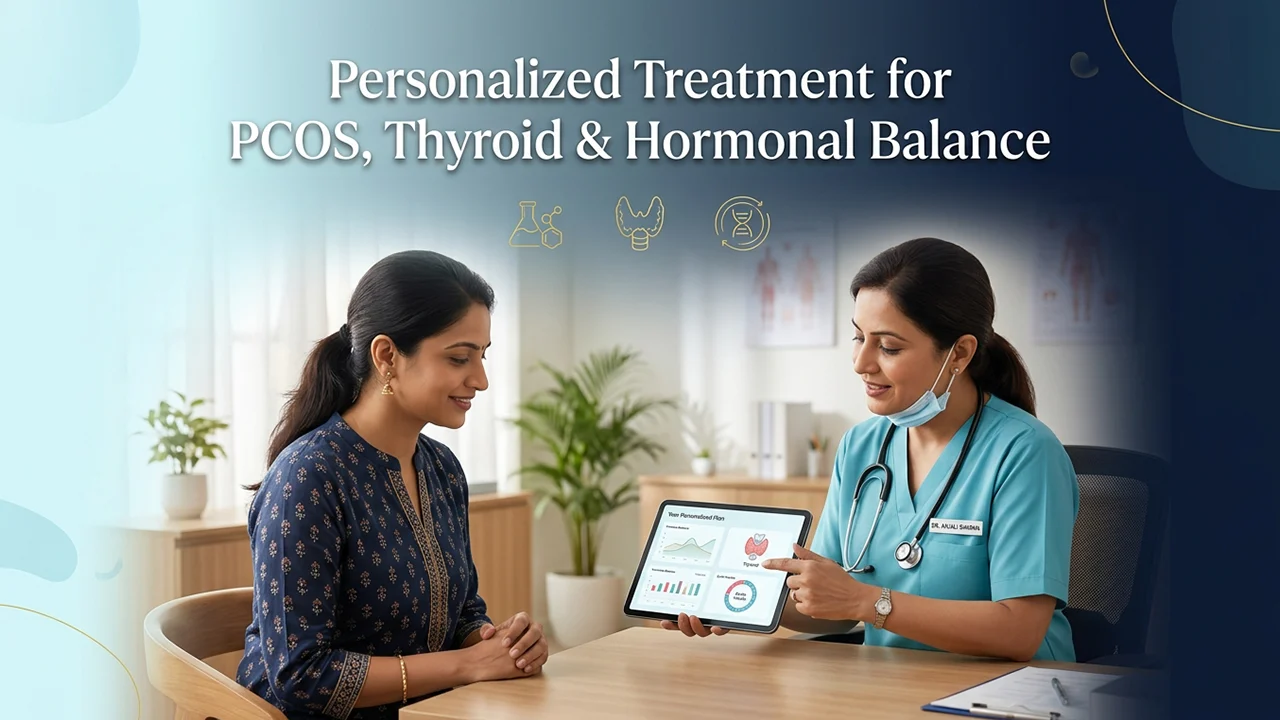
A functional medicine approach usually starts with a simple question: what pattern is driving the symptoms underneath? Instead of looking at one symptom in isolation, it tries to look at the whole picture alongside proper medical evaluation. That does not replace standard diagnosis or treatment. It adds a broader lifestyle and root pattern view to it. This is especially useful when symptoms overlap or when “normal looking” reports do not fully explain how someone feels.
Why PCOS Thyroid & Hormonal Imbalance Often Overlap?
These conditions can overlap because they affect some of the same body systems.
What they may share?
Irregular or missed periods
Fatigue or low energy
Weight changes
Mood shifts or brain fog
Fertility related concerns
Metabolic stress, including insulin resistance in many women with PCOS
Why that overlap matters?
When symptoms look similar, it is easy to assume there is only one problem. But sometimes PCOS is present, sometimes thyroid dysfunction is present, and sometimes both need attention. Reviews have noted that PCOS and thyroid disorders can coexist and may increase reproductive and metabolic risk.
What may look the same and what may not?
| Symptoms that can overlap | Often highlighted in PCOS | Often highlighted in hypothyroidism |
|---|---|---|
| Irregular periods | Acne | Feeling cold |
| Tiredness | Excess facial or body hair | Constipation |
| Weight changes | Ovulation problems | Dry skin or dry, thinning hair |
| Mood changes | Oily skin or skin tags | Slower heart rate |
| Hair related concerns | Insulin resistance pattern | Heavy or irregular periods |
This is why self diagnosis can get confusing. A woman may search for PCOS, thyroid, or general hormonal imbalance and still not know what is actually driving the symptoms.
A common pattern many women notice
It often starts like this:
Periods become delayed or irregular
Tiredness does not improve much
Weight becomes harder to manage
Acne, hair fall, or unwanted hair growth begin to show up
Test results may appear within normal range, but the symptoms continue
That is usually the point where a wider review becomes more useful than chasing one symptom at a time.
Why one normal report may not feel like a full answer?
A single normal value does not always explain the whole symptom picture. Symptoms still need context.
What may still need review?
Whether cycles are regular or not
Whether there are signs of ovulation problems
Whether thyroid function has been checked properly
Whether insulin resistance or weight changes are part of the picture
Whether the symptoms have been building slowly over time
In the 2023 international PCOS guideline, thyroid stimulating hormone, or TSH, is one of the tests used when excluding other causes before diagnosing PCOS. That matters because thyroid problems can overlap with PCOS like symptoms.
How doctors usually sort this out?
This part is important. Symptoms alone are not enough.
A proper evaluation may include
Menstrual history
Acne, hair growth, or hair thinning review
Thyroid testing such as TSH and related assessment when needed
Review of weight changes, blood sugar risk, and metabolic signs
Assessment for PCOS features like ovulatory dysfunction or androgen related symptoms
Ruling out other causes before calling it PCOS
The key point is simple: PCOS is not diagnosed by one symptom, and thyroid symptoms should not be ignored just because cycles are irregular.
Where insulin resistance often fits in
Insulin resistance is one of the most important patterns in PCOS, even though not every woman with PCOS will look the same. It can affect ovulation, androgen levels, weight, and long term metabolic health.
Signs that may point toward this pattern
Weight gain that feels out of proportion
Strong sugar cravings or energy dips
Darkened skin folds in some women
Irregular periods with acne or hair-related changes
Family history of diabetes or metabolic issues
This does not mean insulin resistance explains every hormonal symptom. It means it is too important to overlook in a PCOS related discussion.
What a functional medicine approach usually tries to do?
Instead of treating PCOS, thyroid issues, and hormonal imbalance separately, a functional medicine usually looks for the bigger pattern.
In practice, it looks at
Menstrual health
Thyroid function
Insulin and metabolic stress
Stress and sleep quality
Food habits and energy stability
Movement and body composition
Symptom patterns over time
This kind of approach works best when it is added to proper diagnosis, follow up testing, and evidence based medical care, not used instead of them. Lifestyle, behavior, and long term metabolic health are already central parts of evidence based PCOS care.
Functional approach does not have to mean anti conventional care
That distinction matters.
| Conventional Care Often Helps With | A Functional Medicine Style Lens May Add |
|---|---|
| Diagnosis | Pattern tracking over time |
| Thyroid medication when needed | Sleep, stress, and food review |
| Cycle control or fertility planning | Metabolic and lifestyle support |
| Lab monitoring and medical safety | Personalized daily habit changes |
The strongest care plan is often integrated. It is not about choosing one side and rejecting the other.
What a practical plan may include?
Daily foundations
Meals that support steadier energy and better blood sugar control
Regular movement that feels sustainable
Better sleep timing and sleep quality
Stress reduction that is realistic, not extreme
Symptom tracking across cycles, energy, skin, and mood
Medical support when needed
Thyroid treatment if hypothyroidism is diagnosed
Cycle support based on symptom severity and fertility goals
Follow up testing when symptoms continue
Referral to a gynecologist, endocrinologist, or fertility specialist where appropriate
What the goal usually is?
More regular cycles
Better energy
Easier weight management
Clearer understanding of what is actually driving symptoms
A plan that feels sustainable, not temporary
When should you seek help sooner?
Do not keep waiting if the body is clearly asking for more attention.
It is worth getting evaluated if
Periods stay irregular for months
Tiredness continues even after sleep improves
Weight keeps changing without a clear reason
Acne, hair growth, or hair fall are increasing
You are trying to conceive
Symptoms continue even though earlier treatment was tried
Getting the pattern identified earlier can make treatment clearer and more effective.
Managing PCOS & Thyroid at Oxyplus Wellness Centre
PCOS, thyroid issues, and hormonal imbalance often feel confusing because the symptoms can overlap so much. That is exactly why a broader, more thoughtful approach can help. The real goal is not just to quiet one symptom for a short time. It is to understand what is happening across cycles, metabolism, thyroid health, energy, and daily function. At Oxyplus Medical & Wellness Centre, the focus is on identifying these underlying factors through a functional medicine approach , The goal is to correct hormonal imbalance in a more consistent way rather than relying only on temporary control. This approach supports long-term management of persistent symptoms for those exploring functional medicine for PCOS in India or looking for a hormonal balance center in Chennai.
Recent Blogs

Struggling to Lose Weight Despite Dieting? Find Out Why
September 16, 2026
Chronic Fatigue: The Real Causes Behind Your Tiredness
September 03, 2026
How the Gut-Brain Connection Affects Your Sleep Quality
July 30, 2026
How to Prevent Neck & Chronic Back Pain from Desk Work
July 21, 2026
How Peptide Therapy Helps Your Body Repair & Recover
July 20, 2026
Understanding the Link Between Gut Health & UTIs
July 06, 2026
Natural Back Pain Relief Without Surgery or Medicines
July 02, 2026
Common Signs of Toxin Buildup & Daily Detox Habits
Jun 29, 2026


What Happens During Colon Hydrotherapy & Is It Right for You
April 29, 2026
What is NAD IV Therapy? How Does It Support Aging & Energy?
April 28, 2026
Functional Medicine For PCOS Thyroid Hormonal Imbalance
April 09, 2026
What Is Glutathione & Why Does Your Skin Need It?
April 06, 2026

Common Signs of Vitamin and Mineral Deficiency
February 27, 2026
Is Your Gut Health Affecting Mood Through the Brain Axis?
February 18, 2026
Ozone Therapy 101: Boost Immunity with Medical Oxygen
February 16, 2026