- oxyplusmedicalcentre@gmail.com
-
Mon - Sat, 10.00AM - 07.00PM

Tips to Balance Sleep, Stress & Nervous System
Your nervous system manages your emotions, thoughts, breathing, and heartbeat. When the stress level stays raised, sleep becomes poor. Over time, this can result in fatigue, poor concentration, emotional changes, and mental stress.
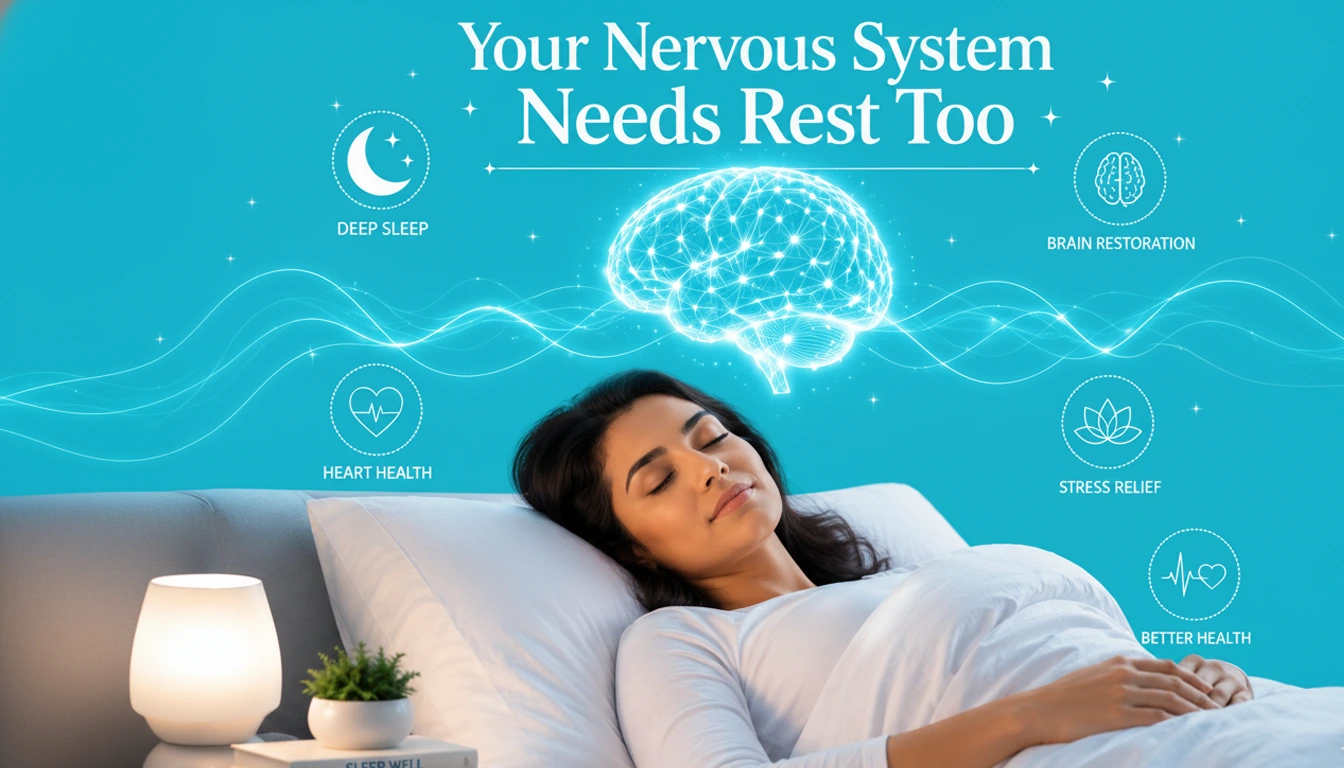
The nervous system stays healthy and active when you get enough rest and control your stress. Small lifestyle changes can help your body manage stress. This blog explains how stress and sleep influence the nervous system and what you can do naturally to support it.
What Is the Nervous System?
The nervous system acts as the body’s communication network. It sends messages from the brain and spinal cord to the rest of the body.
Main Parts of the Nervous System
| Part | What It Does |
|---|---|
| Sends | Controls thoughts, emotions, memory, and body functions |
| Spinal Cord | Connects the brain to the rest of the body |
| Nerves | Help the brain and body to communicate with each other |
| Autonomic Nervous System | Controls automatic actions like breathing and heartbeat |
The Nervous System: A Quick Look
To understand how stress and sleep are connected, first you need to know how the nervous system operates. It works quietly in the background and controls body functions automatically, without conscious effort.
It has two main modes that shift your body between action and rest.
The Sympathetic Nervous System
This system turns on when your body handles stress or risk. It gets you ready to respond fast.
The Parasympathetic Nervous System
This system activates when your body feels safe. It slows things down and helps you recover and restore energy.
How Stress Influences Your Body
Stress is a normal short-term response. Your body handles it well when it comes and goes. The problem arises when stress becomes continuous throughout the day.
Whenever there is stress, the brain releases cortisol and adrenaline. This keeps you sharp and responsive in the short term. High cortisol and adrenaline keep the body in an alert state. This slowly affects sleep, energy, focus, and overall balance.
The Long-Term Damage
Brain Remodeling
High cortisol levels shrink the hippocampus. This region plays a key role in memory and learning.
Hyper-Reactive Amygdala
The amygdala is the part of the brain that controls fear. When stress continues for a long time, this part becomes more active and sensitive. As a result, even a small or normal situation can feel dangerous or too much to handle.
Vagus Nerve Suppression
The vagus nerve helps calm your body after stress. When stress continues for too long, this nerve becomes less active. This makes it difficult for the body to relax, even when there is no real danger.
The Biological Purpose of Sleep
Sleep is not only physical rest. While you sleep, the brain carries out repair processes and supports nervous system function.
Lymphatic System
During deep sleep, the brain clears out waste and harmful substances on its own. If this does not happen regularly, the buildup stays in the brain and gradually affects the memory.
Synaptic Plasticity
While you sleep, the brain sorts through the day's information. It retains what is important and removes the unnecessary ones. This keeps the mind clear and ready to learn new things.
Hormone Reset
Sleep stabilizes stress hormone level. This keeps the mood, hunger, blood sugar and the immune system in a healthy balance.
The Toxic Loop of Insomnia and Tension
Stress and poor sleep are connected. One makes the other worse. When stress increases, the quality of sleep decreases. And when sleep is poor, the nervous system is more sensitive to stress. This becomes repetitive and hard to get out of it.
Step 1: Stress Reduces Sleep Quality
The presence of high cortisol keeps the brain active at night. This stops the body from settling down and getting into deep sleep.
Step 2: Poor Sleep Increases Stress
Without enough sleep, the brain becomes more emotional and reactive. Things that normally seem small can feel much harder and more stressful.
Step 3: Mental and Physical Tiredness
After some time, the body and brain get exhausted. You are constantly tired, but getting good sleep still feels impossible.
Practical Ways to Calm Your Nervous System
You don’t need to completely change your lifestyle to care for your nervous system. Simple daily habits are enough to help it recover and function better.
1. Manage Light Exposure
Light plays a key role in regulating your circadian rhythm - your body's natural 24-hour cycle that controls sleep, energy, and alertness.
Morning Sunlight
Get a few minutes of morning sunlight after waking. It trains your body to sleep well at night.
Evening Darkness
Reduce your screen time at night time. Excess light exposure delays sleep and keeps the brain unnecessarily alert.
Practice Slow Breathing
Slow breathing tells your nervous system to calm down. It helps you move from feeling stressed to feeling relaxed.
Simple Breathing Method
-
Take a deep breath through your nose
-
Inhale one more short breath
-
Exhale slowly through your mouth
-
Repeat this a few times to slow your heart rate and reduce tension.
2. Improve Healthy Eating and Drinking Practices
The digestive and brain systems are well-connected through the nervous system. The kind of food and drink choices affect stress.
Limit Late Caffeine Consumption
Coffee before bed hurts your sleep. It makes falling asleep harder and deep sleep worse.
Skip Heavy Meal
Avoid heavy meals before going to bed. It can affect your sleep cycle and slow down overnight recovery.
A Simple Practice Good for Your Nervous System
Regular habits improve sleep, increase energy levels, and reduce stress.
Morning Checklist
-
Get natural sunlight early in the morning
-
Delay your morning coffee by at least 30–60 minutes after waking
-
Do stretching or walking for a few minutes
Routine practices help the body wake up naturally and manage morning stress levels.
Afternoon Checklist
-
Take short breaks during work
-
Do slow breathing when under pressure
-
Avoid caffeine after 2 PM
These simple steps reduce mental overload and help you to stay focused throughout the day.
Evening Checklist
-
Switch to softer lighting at night
-
Step away from stressful work before bed
-
Keep the bedroom cool, dark, and quiet
An evening routine helps the nervous system prepare for deep sleep.
Balance Your Stress & Sleep for a Better Nervous System
Everyday sleep and stress levels shape your nervous system function. Prioritize healthy sleep, regular exercise, breathing, and reduce screen time. These consistent habits allow your nervous system to recover and function at its best.
At Oxyplus Medical and Wellness Centre in Chennai, we offer wellness support and stress care programs to help you improve sleep, manage daily tension, and support a healthier nervous system in a simple and practical way.

Recent Blogs

Struggling to Lose Weight Despite Dieting? Find Out Why
September 16, 2026
Chronic Fatigue: The Real Causes Behind Your Tiredness
September 03, 2026
How the Gut-Brain Connection Affects Your Sleep Quality
July 30, 2026
How to Prevent Neck & Chronic Back Pain from Desk Work
July 21, 2026
How Peptide Therapy Helps Your Body Repair & Recover
July 20, 2026
Understanding the Link Between Gut Health & UTIs
July 06, 2026
Natural Back Pain Relief Without Surgery or Medicines
July 02, 2026
Common Signs of Toxin Buildup & Daily Detox Habits
Jun 29, 2026

What Happens During Colon Hydrotherapy & Is It Right for You
April 29, 2026
What is NAD IV Therapy? How Does It Support Aging & Energy?
April 28, 2026
Functional Medicine For PCOS Thyroid Hormonal Imbalance
April 09, 2026
What Is Glutathione & Why Does Your Skin Need It?
April 06, 2026

Common Signs of Vitamin and Mineral Deficiency
February 27, 2026
Is Your Gut Health Affecting Mood Through the Brain Axis?
February 18, 2026
Ozone Therapy 101: Boost Immunity with Medical Oxygen
February 16, 2026